Rural communities across Washington face a familiar challenge: a shortage of providers. For years, graduate nursing students who wanted rural training have struggled to afford the travel, housing, and the time away from paid work required to complete rural rotations. Rural clinics, meanwhile, lacked the capacity to onboard new graduates or build the kind of support that helps clinicians settle in the areas where they trained.
The Rural Nursing Health Initiative (RNHI) — a statewide partnership led by the University of Washington School of Nursing with funding support from Premera’s Social Impact team — set out to change that. Launched seven years ago, RNHI was built around a simple premise: rural communities have better health outcomes when they have providers who understand them, want to be there, and have the tools to meet a wide range of needs. As Anne Hirsch, a nurse practitioner, professor, and the initiative’s principal investigator, said, “We knew nurse practitioners can have a major positive impact in rural communities.” The question was how to get them there and how to help them stay.
Helping students find a way
Anita Souza, co-investigator and nursing faculty member, said students were already interested in rural training, but the pathway wasn’t there. That’s why one of RNHI’s first moves was to create a Doctor of Nursing Practice (DNP) track and to remove many of the financial barriers. With dedicated funding, the team was able to begin offering $10,000 stipends, and the response was immediate. Applications came in from across the state. “Students were very interested, and it was a competitive process,” Souza said.
Another unique feature of the DNP track was that it wasn’t limited to UW. From the beginning, the UW team opened it to every other major DNP program — WSU, Seattle University, Pacific Lutheran University, Seattle Pacific University, and Gonzaga — and built it around a shared steering committee. In a field where schools typically compete for clinical placements, the collaboration became one of RNHI’s standout achievements. “Working together was a huge piece of this initiative,” said Rebecca Wood, RNHI assistant director.
The collaborative approach was effective because as schools shared sites and helped one another place students, it created a broader, more connected rural training pipeline. “The goal was really to help the rural communities, and the best way to do that was to include everyone,” said Hirsch.
A foundation of fellowship
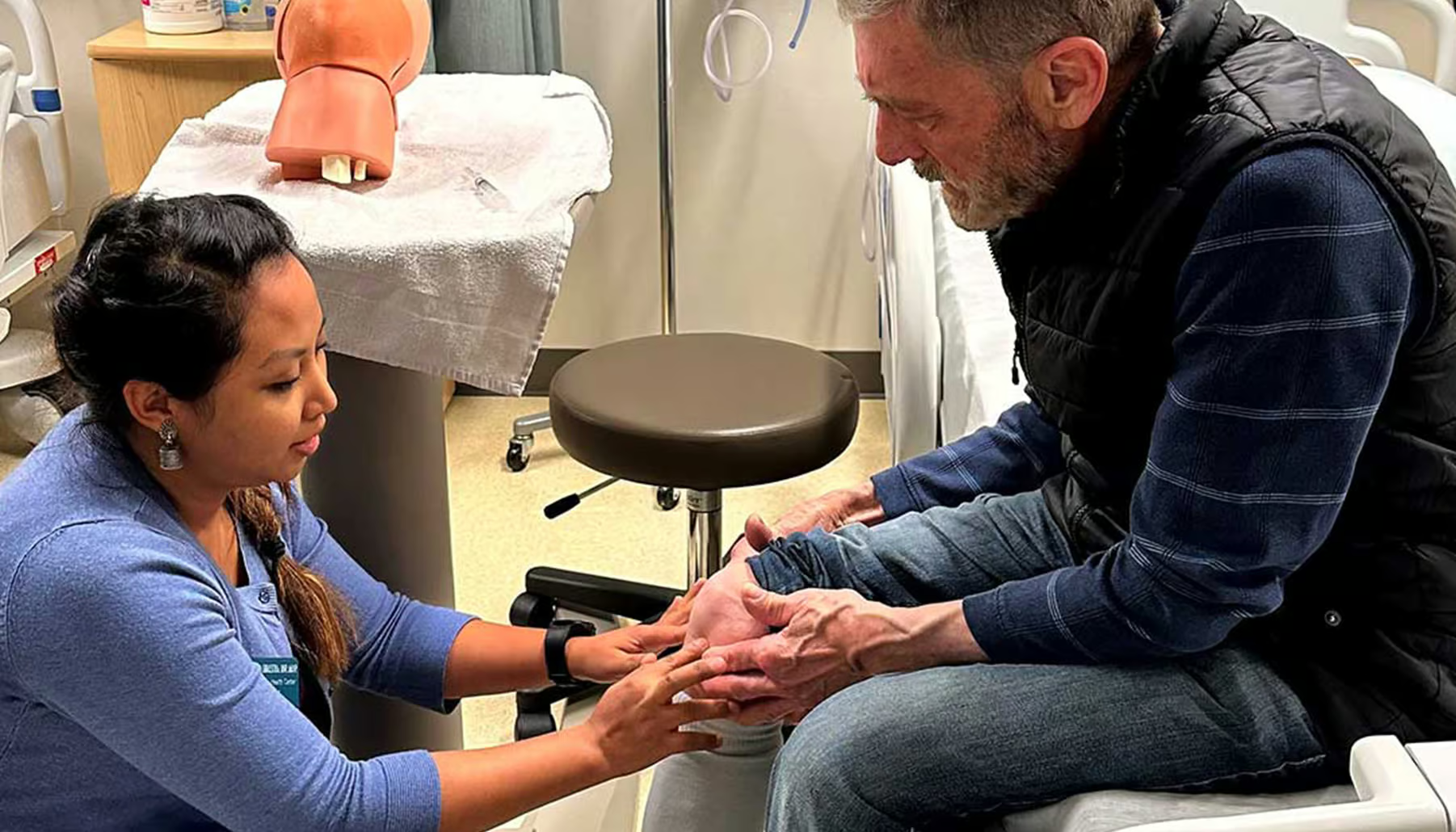
The second track was more ambitious: creating year‑long, mentor-supported rural nurse practitioner fellowships — essentially postgraduate residencies — in clinics across the state. Designed to prepare new NPs for the complexity and independence required in rural practice, the fellowships feature weekly didactic sessions, hands‑on skills labs at UW, and ongoing support from experienced clinicians.
However, getting the green light from the clinics wasn’t easy. They were interested, but many lacked the resources to host a fellow. Some clinics needed years to prepare, and of course COVID-19 slowed everything further. Fortunately, once the model was established, demand grew quickly. Clinics that had struggled to recruit providers were suddenly receiving more applicants than they had never seen before.
The initiative’s centralized model for the fellowship track was likely a factor in early success, and involved the UW team handling tasks such as recruitment, application review, interviews, and training. “A rural site could not have done that on their own,” Hirsch said. This made it easier for clinics to participate without stretching already thin resources.
Continuity of care
Some of the strongest success stories come from places like Republic in Eastern Washington not far from the Canadian border, where two fellows from the 2022–23 cohort have been able to stay on after completing the program. One wasn’t able to stay full time, but found a way to create a hybrid model, practicing in person one week a month and providing telehealth the rest of the time. Republic has since hosted additional students and the original two fellows are now supporting the next cohort. “It’s just so cool to see fellows who were new providers taking on students and helping their transition to practice,” Wood said.
That continuity matters. Rural communities often experience high provider turnover, which erodes trust and makes patients reluctant to seek care. The fellowship addresses some of that by sending fellows to see the community for themselves, through a sort of “windshield survey” that helps them understand the community they’re serving. That understanding really matters, Souza said. “It’s so critically important as they approach their patients. It helps to build that trust.”
That trust also shaped RNHI’s partnership with Premera. When COVID-19 hit just a month after launch, RNHI wanted to carry forward unspent funds and think resourcefully about how to reallocate them. One idea was to provide $20,000 per fellow directly to rural sites to offset onboarding costs, which was readily approved. That sort of budget flexibility is rare with healthcare grants, Wood noted. “It was a joy to work with a foundation that let us be creative,” she added.
By the numbers, and beyond
In terms of providing training, RNHI is accomplishing a lot of what it set out to do. More than 80 students have completed rural rotations through the initiative, and even those who ultimately took jobs in urban areas note that it’s not unusual to see a patient from a rural area who had to travel to a larger city for care. In those cases, they are glad to have gained a deeper understanding of rural health systems and the gaps those patients face.
As Souza put it, “They know what their patients are going back to.” That awareness shapes how they practice, coordinate care, and advocate for patients who have to travel for services their hometowns may not have.
In addition to boosting the care provider pipeline, Souza mentioned there is a real benefit from the professional relationships that the RNHI has helped foster. “We have connected Republic to Tenino to Aberdeen and all of these clinics,” Souza said. “It creates this beautiful spider web network of rural providers where everyone remains connected long after the fellowship. I think that’s the amazing part of this story.”
Together, all these elements — the fellows who stay in rural settings, the students who carry their insights into urban practice, and the vibrant network that supports clinicians long after their fellowship year — paint a multidimensional picture of the program’s success. RNHI is doing more than training providers. It’s building a community of practice that strengthens rural healthcare across Washington, one relationship at a time.